
A beginner-friendly guide to the system that makes cannabis work — and why it matters for everyone, whether you use cannabis or not.
The Discovery That Changed Human Physiology
In 1992, a team of researchers led by Dr. Raphael Mechoulam made a discovery that quietly rewrote the textbooks on human biology. While studying cannabis science to understand how THC — the primary intoxicating compound in the plant — interacts with the brain, they stumbled onto something far bigger: a vast, previously unknown regulatory network woven throughout the entire human body.
They called it the endocannabinoid system, or ECS.
Here is the remarkable part: you have had it your whole life. We all have. In fact, every mammal on Earth possesses one. The ECS exists independently of the cannabis plant; it has almost nothing to do with cannabis itself. Instead, cannabis simply happens to mimic the molecules your body naturally produces to keep you healthy.
“The ECS is one of the most important physiological systems involved in establishing and maintaining human health.”
— Dr. Ethan Russo, neurologist and cannabinoid researcher
What Is the ECS and How Does It Work?
To understand what is the ECS, it helps to think of it as your body’s master regulator. Its primary job is to keep your internal environment stable, a biological state known as homeostasis. The ECS acts like a microscopic thermostat, constantly monitoring internal conditions and making micro-adjustments to keep everything in balance.
Too much inflammation? The ECS works to dial it down.
Sleep disrupted? The ECS actively steps in to regulate your sleep architecture.
Mood destabilized by stress? The ECS plays a direct role in bringing you back to center.
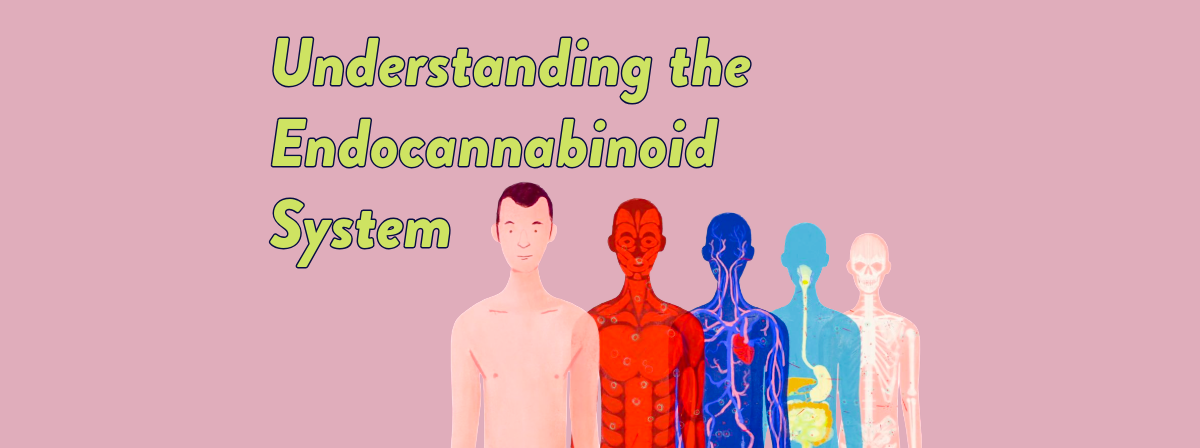
Because it is found throughout your brain, central nervous system, immune system, major organs, and even your skin, it impacts almost every facet of daily wellness. It is, in short, everywhere.
The Three Building Blocks: Cannabinoids, Receptors, and Enzymes
To truly understand how cannabis works, you have to understand the three core components that make up the endocannabinoid system.
- Endocannabinoids (The Chemical Messengers) — These are molecules your body produces naturally. The two most studied are anandamide (often nicknamed the “bliss molecule”) and 2-AG. Your body makes them on demand and uses them to send messages between cells.
- Receptors (The Cellular Locks) — There are two primary types:
- CB1 receptors, found mainly in the brain and nervous system
- CB2 receptors, found mostly in the immune system and organs.
Think of receptors as locks, and endocannabinoids as keys that activate them.
- Enzymes (The Clean-up Crew)— Once an endocannabinoid has done its job, enzymes break it down so it doesn’t overstay its welcome. This is the ECS’s built-in off switch.
What Does the Endocannabinoid System Regulate?
Because CB1 and CB2 receptors are located throughout the entire body, the scope of the ECS is incredibly broad. Research has linked the ECS to a wide range of bodily functions, including:
Mood, anxiety, and emotional response
Sleep cycles and circadian rhythm
Appetite, digestion, and metabolic health
Pain perception and acute/chronic inflammation
Memory retention and neuroplasticity
Immune system function and cellular defense
Stress response and cortisol regulation
- Reproductive health
This vast diversity is exactly why cannabis can feel so entirely different from one person to the next. Your individual endocannabinoid system is deeply personal, shaped by your unique genetics, daily lifestyle, stress levels, and historical health.

Where Cannabis Comes In
This brings us to how cannabis works within the human body. Cannabis contains natural botanical compounds called phytocannabinoids (cannabinoids made by a plant, rather than your own biology). The most well-known are THC (tetrahydrocannabinol) and CBD (cannabidiol), but the plant contains over 100 others that researchers are actively studying.
These plant-based cannabinoids interact with the same receptors your endocannabinoids use. THC, for example, binds directly to CB1 receptors — which is why it produces psychoactive effects. CBD works more indirectly, influencing how your own endocannabinoids behave rather than binding strongly to receptors itself.
This is also why different cannabinoids, terpenes, and consumption methods produce such different experiences. The ECS isn’t a simple on/off switch — it’s a nuanced, responsive system.
The ECS doesn’t need cannabis to function. But for many people, plant-based cannabinoids offer meaningful support for a system that’s already doing its best.
Clinical Endocannabinoid Deficiency: An Emerging Theory
What happens if your body isn’t producing enough endocannabinoids? Some researchers, including Dr. Ethan Russo, have proposed a concept called Clinical Endocannabinoid Deficiency (CECD) — the idea that some people may naturally produce lower levels of endocannabinoids, potentially contributing to conditions like migraines, fibromyalgia, and irritable bowel syndrome.
This is still an emerging area of research, not an established diagnosis. But it points toward a broader idea: that supporting your ECS — through sleep, exercise, nutrition, stress management, and potentially cannabis — may be worth taking seriously.
What This Means for Your Wellness Journey
You don’t need to be a scientist to benefit from understanding the ECS. What matters is this: cannabis works the way it does because your body already has the architecture for it. The effects you feel — relaxation, altered perception, relief, focus — are your ECS responding to input.
That’s why thoughtful, informed use matters. The ECS is a finely tuned system. Working in harmony with your body — rather than overloading it — tends to produce better, more consistent results.

Come Ask Us Anything
At Ritual, we believe an educated patient is a happy patient. Understanding your own biology is the first step toward a more intentional relationship with cannabis.
Have questions about the ECS, cannabinoids, or finding the right product for your goals? Our team is here — no pressure, no judgment. Just real conversation.
Visit us in store or follow along at @explore_ritual.